

What Size Filter Housing and Cartridges Do I Need?
Sizing a filter housing and cartridges is a balance between the flow you need to keep production at its peak and the conditions the cartridges need to deliver the retention you've specified. At Endoer Filtration, we work through it in three steps: calculate how many equivalent single 10" lengths (EQSLs) you need, choose a housing that holds at least that many, and confirm the port size keeps linear flow velocity below 8-10 ft/s so the housing doesn't add unwanted pressure loss.
How Do I Know How Many Filter Cartridges I Need?
An EQSL is one 10" length of cartridge. Your required EQSL count depends on two things: the type of cartridge you want to use (meltblown, pleated depth media, membrane, resin-bonded, and so on) and the highest initial pressure drop your application can tolerate. For most applications that fall between 0.5 and 2 psid. Each cartridge's technical data sheet gives you the pressure drop data you need.
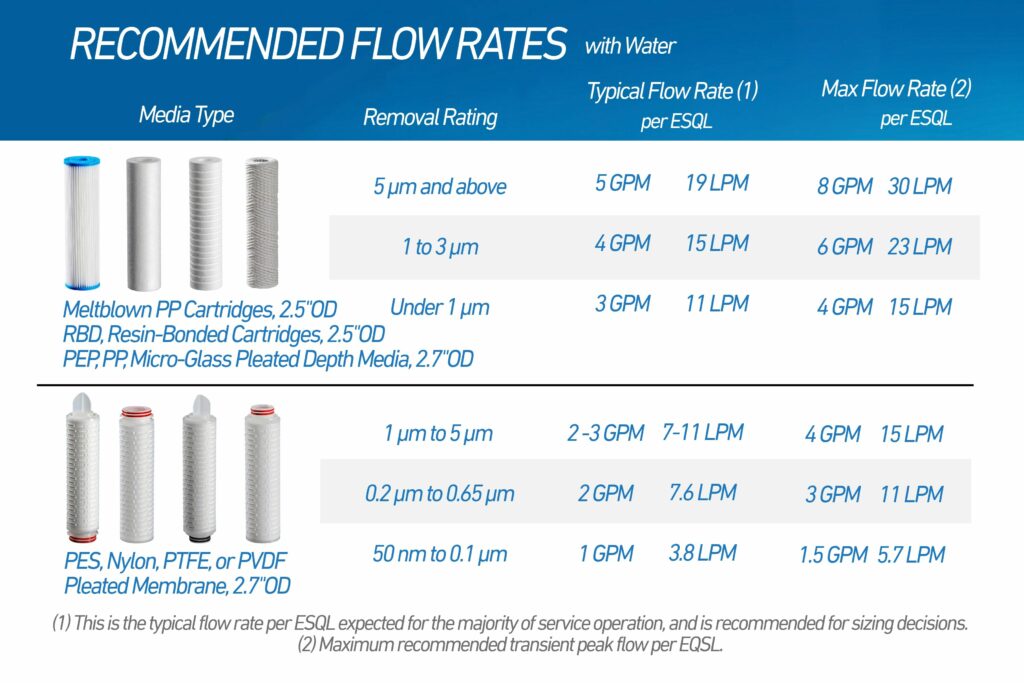
For example, your application runs at 90 gpm, and you want a 1 µm absolute-rated pleated polypropylene depth media cartridge with an initial pressure drop of 0.5 psid or less. The data sheet shows flow needs to stay below 3 gpm per EQSL to hit that number. That puts you at 30 EQSLs (90 gpm ÷ 3 gpm per EQSL).
Tighter media takes more EQSLs for the same flow. If you're moving to a PES membrane filter or another pleated membrane in the 0.2 to 0.65 µm range, the same 90 gpm at 2 gpm per EQSL would call for 45 EQSLs.
What Size Filter Housing Is Appropriate for My Flow Rate?
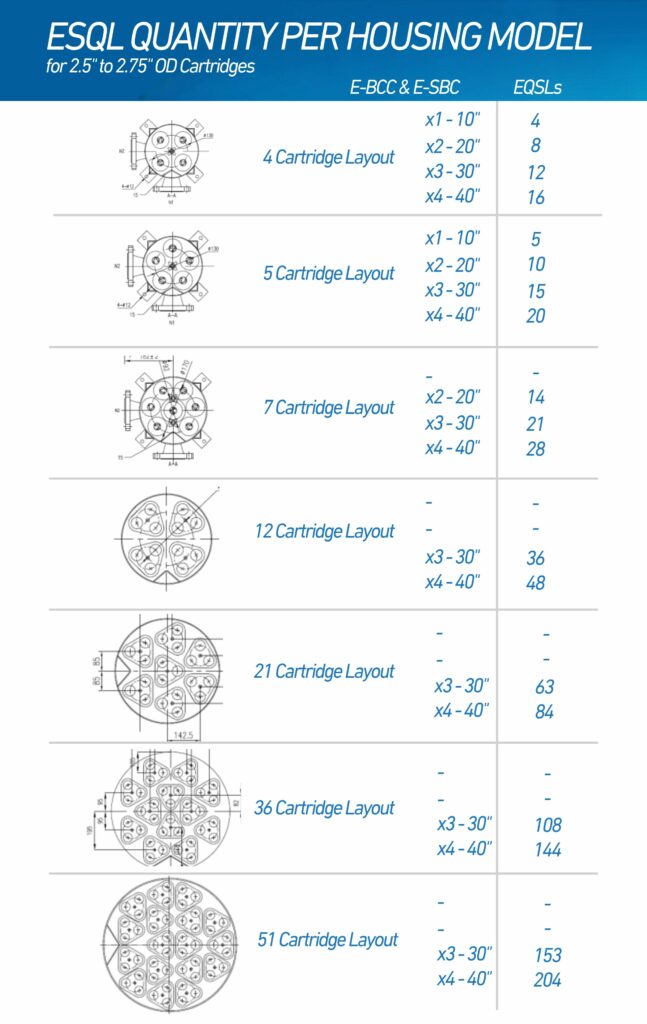
Once you have your EQSL count, pick a housing that accommodates at least that number. The EQSL quantity for a housing is its number of cartridge positions multiplied by the number of 10" lengths.
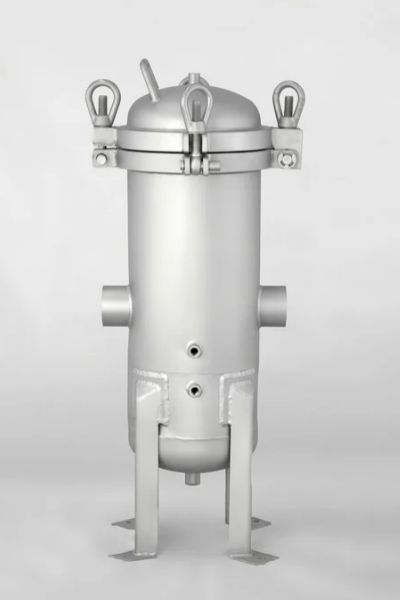
In the 30 EQSL example, the closest available count is 36, so the recommended housing is a 12x3. That's a stainless steel filter housing with 12 cartridge positions that takes 30" cartridges.
You might step up to a larger housing, such as a 12x4 (48 EQSLs), if longer intervals between cartridge change-outs matter to you or if you need a lower clean pressure drop. The same logic applies to the 45 EQSL membrane example, which lands on a 12x4.
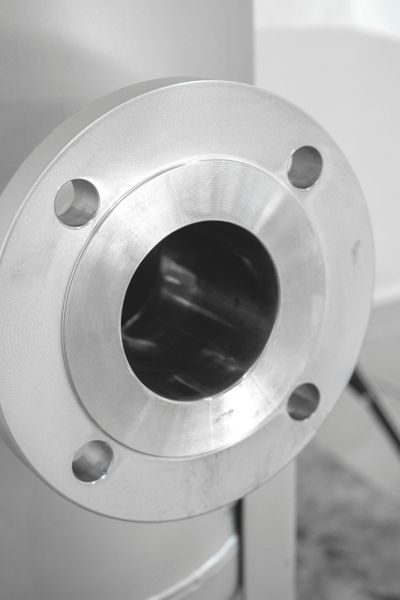
Can The Housing Ports Handle the Flow Rate?
The ports on the housing are the most restrictive region of the flow path through the housing. It’s important to verify that the linear flow velocity through the ports so as to not introduce any meaningful additional pressure loss in the application.
Having linear flow below 8 ft/s is ideal. Some specifying engineers push that to 10 ft/s, but we strongly advise against going over 10 ft/s in normal process flow. You can calculate velocity from your flow rate and port diameter, or look it up in available tables.
Anything Else to Consider?
The process above assumes a single housing. Some sites need multiple housings in parallel to handle the flow rate. In other cases, a system engineer specifies redundant housings in parallel so one can be valved off for servicing without stopping the line. Both setups change how you divide the flow, so it's worth working through them early in the planning stage for industrial filtration systems.
Let's Dial in The Right Housing and Cartridges for Your Needs
The team at Endoer can help walk you through the sizing process and provide a more detailed sizing guide document on request. Give us a call or send an inquiry for help in finding the right fit for your filtration system.