

Is Absolute+ (99.98%) the Best Filter Retention Rate to Choose?
Often, no. For many applications, 99.98% retention costs more and shortens filter life without improving results enough to justify it. At Endoer Filtration, we're regularly asked for cartridges at this retention level, and in many cases an absolute-rated cartridge in the 95-99% range offers sufficient performance and better value for a given job.
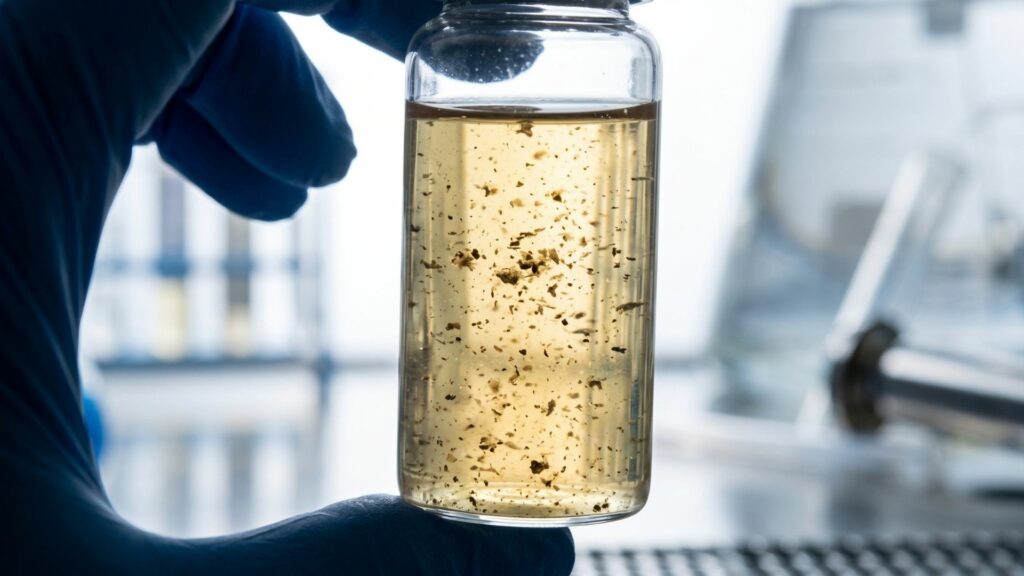
What 99.98% Retention Means
A 99.98% retention rating is also known as Beta 5000 retention. It means that for every 5,000 particles of the rated size that reach the cartridge, one gets through. That's a tight spec, and it's the reason it gets requested so often: higher retention sounds like better protection for the process.
The trouble is that retention is only one part of how a cartridge performs. Cost, pressure drop, and service life all affect what you get out of a filter over time.

Read: "Up to 99.98%"
Many cartridges on the market are advertised with "up to 99.98% retention." The wording matters. "Up to" sets a ceiling, not a guarantee, or what you should expect to get.
If a supplier won't tell you what retention a cartridge delivers under defined test conditions, you don't have much to base a purchase on. It's worth asking for the test method and data behind any retention claim.
When customers ask us to match one of these products, we start by asking what retention they actually need.
Why It's Hard to Reach With Polypropylene (PP)
Ed Giordano, President of Endoer, has managed or collaborated with test labs since the 1980s and has had significant responsibility for media development. In his experience, it's nearly impossible to reach this level of retention with polypropylene media as a practical matter.
The usual approach is to make the filter media tighter by running it through hot rollers that squeeze, or "calendar," it. That does reduce the average pore size, but it comes with trade-offs:
- Pore volume drops, which leaves less room for the media to hold contaminants
- Pressure drop goes up across the cartridge
- Service life gets shorter
For a polypropylene (PP) filter cartridge in a typical liquid filter use, those trade-offs often outweigh the benefit of the extra retention.
Most Applications Don't Need It
In most cases, 99.98% retention isn't necessary for the application. An absolute-rated cartridge with 95-99% retention is usually well suited and can save 10% or more in product cost.
In industrial filtration systems, where cartridges get changed on a schedule or when it drops below a performance threshold, a filter that holds more and runs at a lower pressure drop is often the more practical polypropylene filter choice. The right rating is the one your process requires, not the highest one available.
Absolute Plus vs. Absolute
If your application truly requires 99.98% retention, our "A+" Absolute Plus series is the correct choice.
If you want a product that better matches most competitors' fluid filter cartridges claiming 99.98% retention, we recommend our "A" Absolute rated series. It's more economical and will have a measurably longer service life.
Figuring out the best retention rate for your application tends to raise more questions than it answers, and the right choice depends on your many factors. Our team is available any time to talk through the details with you and help you pick the right cartridge for your industrial filtration process.