

When Should You Change Your Filter Cartridges in Large Industrial Systems?

Two plants running the same cartridge can see very different lifespans depending on the conditions of their system, so giving a set number of weeks or months would not be an optimal guideline. From an industrial filtration supplier with decades of experience, Endoer Filtration suggests selecting a new filter to start at a differential pressure of about 2 PSID and replacing it at 35 PSID, or sooner if the output stops meeting your flow rate, quality, or clarity requirements.

Why Differential Pressure Is the Best Measure of Cartridge Life
As a liquid cartridge filter collects contaminants, it becomes harder for liquid to pass through, and the pressure drop across it rises. How quickly that happens depends on how much contamination is in your fluid, your flow rate, and the cartridge itself.
Your differential pressure readings are real data from your system:
- Record the starting differential pressure each time you install new cartridges.
- Log differential pressure at regular intervals.
- If flow rate or filtered liquid quality isn't meeting your requirements before you reach 35 PSID, note it and change the cartridge anyway.
- Use your logged data as a historical resource to help guide your preventative maintenance schedule.
Anyone selling filters has an incentive to recommend more of them. Relying on your own pressure data takes that out of the equation.
How Do You Find the Right Change-Out Point?
The math is simple, and you can run it on your own system. Change-out differential pressure minus starting differential pressure. At 2 PSID start and 35 PSID change-out, you have 33 PSID of headroom. If your differential pressure climbs about 3 PSID per week, 33 ÷ 3 gives you roughly 11 weeks.
Note that as the cartridge nears the end of its service life, it is common for differential pressure to start climbing faster as the media nears its contaminant-holding capacity. If you don't have historical system maintenance data, this equation can help provide a rough estimate for when to have replacement filters on hand.
The 35 PSID figure is a general guideline based on what filter media and cartridge construction can handle without a meaningful risk of crushing or compromising the filter. Check it against your cartridge's technical data sheet, since the allowable differential pressure depends on the cartridge and your operating conditions.
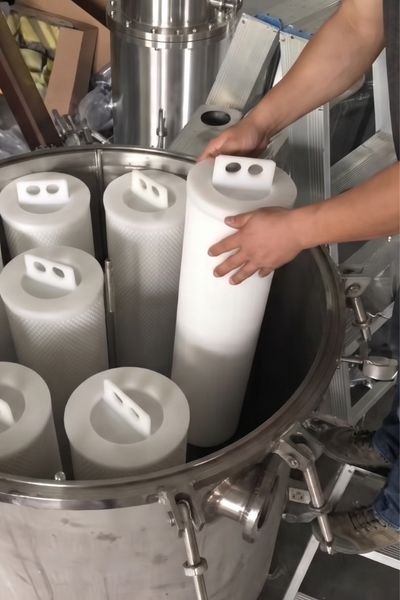
What Happens If You Wait Too Long Before Changing the Filters?
First, you see much less flow coming out of the system. Then the system can start pushing particles through the filter. If pressure keeps building, it can eventually get high enough to crush the filter. A compromised cartridge can dump contaminants downstream, impacting your product quality. The common thread is that once the system puts the filter under too much strain, it can no longer perform as it was engineered to do.
How Do I Avoid Wasting Too Much Time Changing Filters?
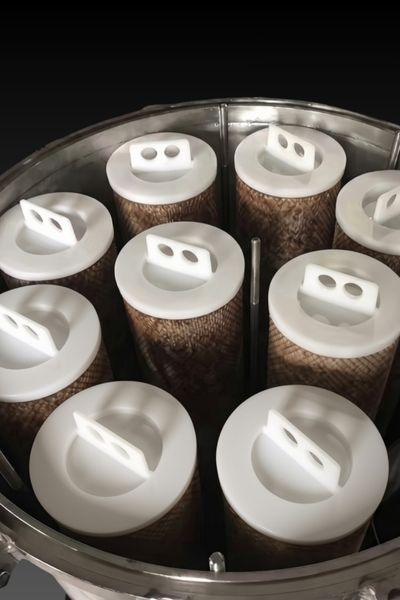
If you feel you're losing productivity to frequent change-outs, we can help pinpoint variables to alter. Prefiltration, choosing a larger housing with more EQSLs, or setting up housings in parallel so one can be valved off for service can also extend intervals or cut downtime.
As a liquid filtration equipment supplier with engineering support, we're glad to look at your numbers with you. We'd rather help you find the right change-out point than sell you more filters than you need. Reach out if we can help optimize your maintenance schedules and equipment costs.